





 By Omri Shafran
CEO, Texas Logistic & Fulfillment Services
LinkedIn profile
Did you know? The estimated online return rate for 2025 was 22.2% higher than the overall retail rate. NRF and Happy Returns projected 19.3% of online sales would be returned versus 15.8% of total retail sales, a 3.5-percentage-point gap. Our relative comparison is based on sales value, not parcel counts or TLS results. For a mixed-channel fulfillment program, estimate returns separately by channel and agree how returned stock becomes available for resale. Source.

Third-party logistics providers have positioned reverse logistics as one of their core competencies, and the market has responded. Brands that once managed returns in-house are moving that function to their 3PL partners, not because it is cheaper per unit in every case, but because the total picture, including labor, space, speed, and customer satisfaction, changes substantially when a provider built for this handles it.
If you run an e-commerce operation and return volume is eating into your margins or slowing your customer experience, this article covers what a 3PL yerine getirme partner actually does in a returns workflow, where the cost savings materialize, and how faster processing translates directly into customer retention.
The Real Cost of Returns in 2026
The industry figure that gets cited most is that returns cost retailers an average of 66 percent of the original item’s value to process. That number covers transportation, labor, grading, restocking, and disposition. For soft goods with short selling seasons or consumer electronics where resale value drops fast, the math is harsher.
What drives cost up inside an unoptimized returns process comes down to four factors. Labor is the largest. Someone has to receive the package, open it, inspect the item, make a grading decision, and then route the item appropriately. If your returns are trickling into a facility that was designed for outbound fulfillment, those staff are context-switching constantly and the processing time per unit climbs. A 3PL with dedicated reverse logistics capacity assigns specialized staff to returns exclusively, which cuts average handling time.
The second factor is speed-to-resale. An item sitting in a returns queue for eight to fourteen days is an item not generating revenue. If you sell seasonal products, a two-week returns processing delay can mean the item misses its window entirely. If you sell commodity goods with thin margins, that inventory sitting idle is cash off your balance sheet. A competent 3PL gets returned items inspected, restocked if sellable, and available for re-pick within one to two business days in most cases.
Storage cost for returned inventory is the third factor, and it surprises operators who have not audited their own facility. Unprocessed returns occupy space, and if your warehouse is running near capacity, that space has real cost. A 3PL charges you for storage, yes, but they process returns fast enough that the inventory does not accumulate. The two or three pallets of returns sitting in a corner of your facility for three weeks are a common version of this problem.
Finally, there is the cost of customer experience. If a buyer has to wait ten days to see a refund or exchange, they will not order from you again. Return window anxiety, where customers worry about whether their return was received and whether the refund will come through, is a documented driver of lower repeat purchase rates. A 3PL that gives you real-time returns tracking and fast confirmation emails addresses this problem without requiring you to build that infrastructure yourself.
What a 3PL Does in a Returns Workflow
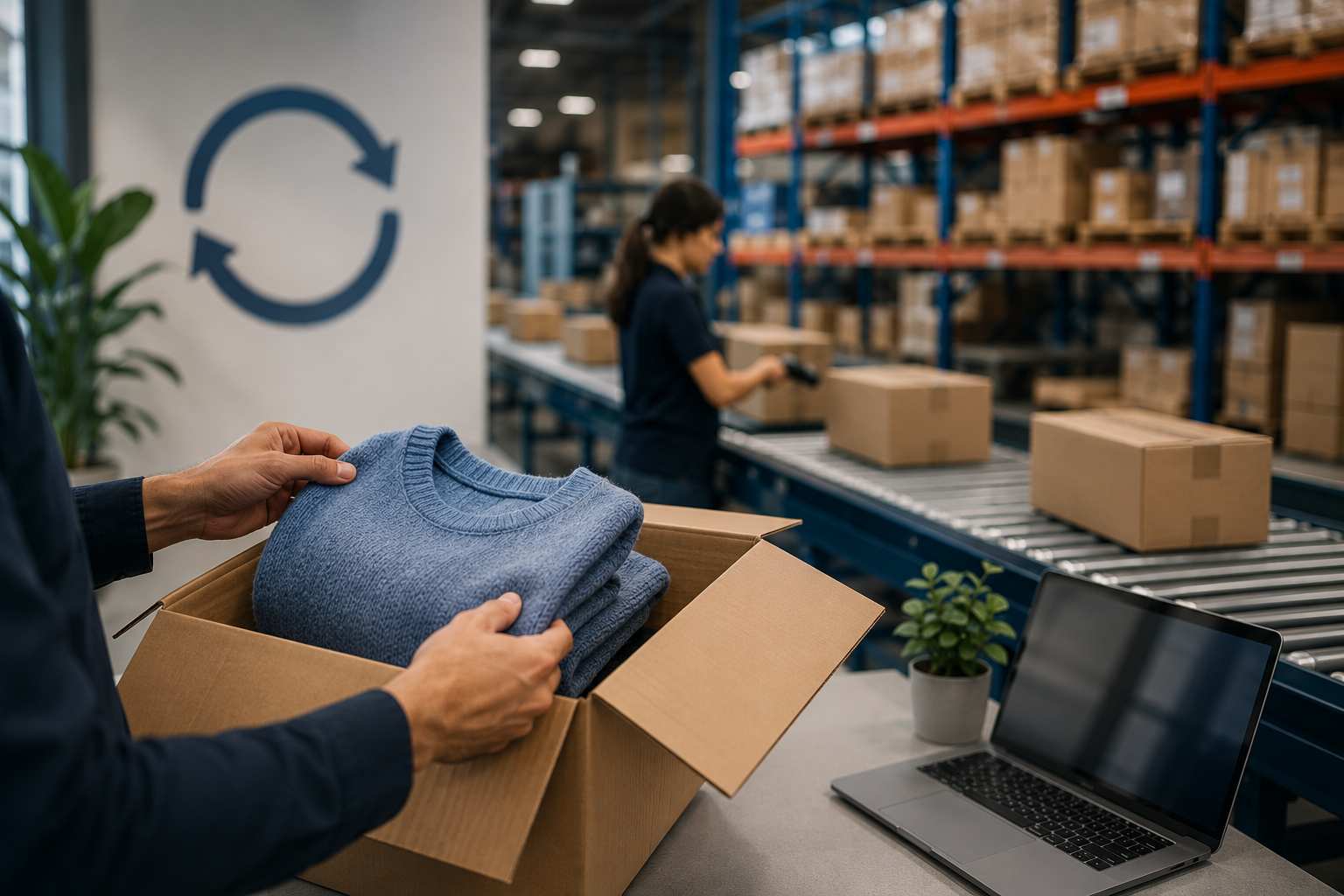
Reverse logistics is not one step. A 3PL handling returns for an e-commerce business runs a multi-stage process that most brands do not replicate well when they keep returns in-house. Understanding each stage helps you evaluate whether your current setup has gaps. This connects directly to the broader 3PL warehousing infrastructure that makes fast returns processing possible.
Receipt and Verification
When a return arrives at the facility, the 3PL scans it against the original order. This creates a chain of custody and triggers the refund or exchange automation in your OMS. The scan captures the return reason code the customer submitted, which feeds into the returns data your merchandising team uses to identify product issues. A 3PL running volume returns will have a receiving dock dedicated to inbound returns, separate from your regular inbound freight, so the processing does not compete with inbound goods.
Inspection and Grading
Grading is where your client-defined standards matter most. Before your 3PL processes a single return, you should give them a clear grading rubric: what constitutes Grade A (unopened, sellable as new), Grade B (opened but complete and sellable), Grade C (damaged but functional, appropriate for discount channels), and what should go to disposal or donation. A 3PL documents the grade on each item, often with photos for high-value SKUs, so you have a record if a customer disputes the outcome.
Grading accuracy directly affects your bottom line. An item incorrectly graded as Grade C and routed to liquidation when it was fully resellable costs you the difference between resale value and liquidation price on every unit. A 3PL with trained returns staff makes fewer of these errors than a fulfillment team handling returns as a secondary task.
Restocking and Disposition
Grade A inventory goes back into available stock immediately. Grade B may go into a dedicated “open box” pool if you sell through that channel, or into a separate bin for bundling into promotions. Grade C routes to whatever disposition channel you have set up: a secondary marketplace, a liquidator, a charity partner, or disposal. A 3PL manages the physical routing of all of this. You set the rules; they execute.
For brands with a lot of volume in higher-value categories, some 3PLs also offer refurbishment as part of reverse logistics. This is particularly relevant in consumer electronics, beauty tools, and small appliances, where a cleaned and repackaged item can return to full-price or near-full-price channels rather than going to liquidation.
Customer-Facing Communication
The refund trigger is the piece customers care most about. A 3PL integrated with your OMS fires the refund confirmation when the item scans in, not when it clears inspection. That matters because inspection happens fast in a dedicated returns facility. Customers see their refund confirmation within a day or two of dropping the return at the carrier, which changes how they feel about buying from you again.
Returns Volume and the Cost-Per-Unit Math
The business case for outsourcing returns to a 3PL is strongest when return volume is high enough to justify dedicated handling infrastructure. If you are processing fifty returns a month, you probably handle that fine in-house. At five hundred returns a month, the math shifts. At five thousand, you need dedicated reverse logistics capacity or you are constantly behind.
The cost-per-unit comparison is straightforward in structure. Your in-house cost includes the labor hours to receive, inspect, grade, and restock each item, the facility space those returns occupy while being processed, the management overhead for running that process, and the cost of errors in grading or disposition. Your 3PL cost is a per-unit processing fee plus any storage fees for returns inventory.
The less obvious savings come from speed. If your 3PL gets a returned item back into inventory in 36 hours instead of your current 10 days, you sell it again faster. On a SKU selling at $60 with a 40 percent margin and a 15 percent return rate, cutting processing time from 10 days to 1.5 days on 500 returns a month represents real recovered revenue from faster inventory turns, on top of whatever you save in labor.
How Return Speed Affects Customer Retention
The direct line from returns experience to repeat purchase is shorter than most brands assume. A buyer who gets a fast, painless return is statistically more likely to place another order than a buyer who never returned anything, because they know the safety net works. A buyer who waits two weeks for a refund confirmation and has to email support twice to check on it will not be back.
The metrics that matter here are time-to-refund and return confirmation speed. Time-to-refund measures how many days pass between a customer dropping off the return and seeing the credit on their statement. Return confirmation speed measures how quickly they receive acknowledgment that you got it. Both are controllable through your 3PL shipping and receiving infrastructure. A 3PL with dedicated returns docks and OMS integration gets you under 48 hours on confirmation in most scenarios, often under 24.
A related factor is the return label and portal experience, which sits upstream of the physical returns process. Many 3PLs can set you up with branded return portals that give customers a self-serve experience: they select the return reason, print a label, and get a confirmation number they can use to track the return. The portal reduces support volume, gives you cleaner return reason data, and makes the experience feel professional even if you are a relatively small operation.
E-commerce brands competing against Amazon need to meet or exceed the expectations Amazon has set for returns. Free returns, fast refunds, and clear communication have become table stakes. A 3PL designed for e-commerce fulfillment gives you the infrastructure to match that standard without building it from scratch.
Returns Data and What You Should Be Tracking
Returns are a data asset that most brands underuse. The return reason your customer selects at the portal, the grading outcome your 3PL records, and the disposition channel each item routes to together tell you a lot about product quality, listing accuracy, and sizing or fit issues.
If 30 percent of returns on a particular SKU come back as “not as described,” your product listing has a problem. If 40 percent of a category come back as “wrong size,” your size guide is off. A 3PL that gives you structured returns data in your analytics dashboard, broken out by SKU, reason code, and grading outcome, turns returns into product intelligence.
The best 3PL partners for e-commerce will build return reason reporting into the standard data feed they send your OMS. You should ask about this during the onboarding process. Combined with the broader inventory visibility you get from 3PL warehousing services, returns data becomes one of the clearest signals for merchandising decisions.
At the operational level, your 3PL’s returns data also helps you forecast. If you know your return rate by category and season, you can plan inbound inventory more accurately and avoid the situation where a wave of post-holiday returns temporarily wipes out your available stock count in a fast-selling SKU.
Considerations for High-SKU and Multi-Channel Operations
Returns management gets more complex at scale, particularly for brands selling across multiple channels with different return policies. A marketplace return, a direct website return, and a retail return may all have different handling requirements, different refund timing commitments, and different grading standards for resale eligibility.
A 3PL that handles multi-channel fulfillment can usually handle multi-channel returns through the same infrastructure. The key is that your 3PL’s WMS correctly identifies which channel a return originated from so it can apply the right processing rules. Some channels require you to inspect and re-label returned inventory before it can go back into that channel’s sellable pool. Others accept returns directly back to the main inventory without re-labeling.
For sellers on Amazon specifically, returned FBA inventory often ends up in unfulfillable status. A 3PL that offers Amazon FBA prep services can remove that inventory from Amazon, inspect it, and either repack it for re-submission to FBA or route it to your own website’s fulfillable inventory. This recovery process turns would-be losses into sellable units, which adds up fast if you have any real Amazon volume.
High-SKU operations also benefit from the 3PL’s barcode and WMS infrastructure. If you carry 800 active SKUs and returns come in across all of them, manual sorting becomes a bottleneck fast. A 3PL scanning each return against the SKU database and routing it automatically to the correct grading bin eliminates that bottleneck and reduces the chance a returned item gets misrouted into the wrong inventory pool.
Setting Up Your Returns Program with a 3PL
The setup conversation with a 3PL should cover your return window, your grading rubric, your disposition channels, and your OMS integration. Get specific on each one before operations begin, because ambiguity in any of these areas creates errors that cost you money or customer trust.
Your return window tells the 3PL what to accept and what to refuse. If your policy is 30 days, the 3PL should be checking order dates against the return and flagging anything outside the window for your review rather than processing it automatically. Your grading rubric, as discussed above, defines the inspection standards and disposition rules for each grade. This is your IP; give it to them in writing and train their returns team on your specific products. If you sell kitted products, make sure your 3PL knows how to evaluate whether all components are present before grading an item as Grade A.
OMS integration is the piece that determines how fast your customers see their refund. The best setups trigger a refund or exchange automatically on scan-in, with a manual review queue for items that arrive outside the return window or in ambiguous condition. Ask your 3PL specifically about this flow and what manual steps remain, because anything requiring a human decision adds time.
Finally, get clarity on what happens to Grade C and disposal items. If you have a liquidation partner or a charity program, your 3PL should be able to route to that directly. If not, many 3PLs have existing relationships with liquidators and can handle that for you, usually for a fee or a revenue share on recovered value.
Working with Texas Logistics Services on Returns Management
Returns are not a cost center you can eliminate, but you can control how much they take and how much damage they do to your customer relationships. The brands getting this right in 2026 are the ones that treat reverse logistics as seriously as forward fulfillment: dedicated infrastructure, trained staff, integrated data, and fast customer-facing communication.
Texas Logistics Services provides end-to-end 3PL fulfillment and warehousing for e-commerce businesses across Texas and beyond. If your current returns process is slow, expensive, or creating customer service problems, our team can walk you through what a modern reverse logistics setup looks like for your specific volume and SKU profile.
Contact us at (346) 766-2151 or visit texaslogisticservices.com to request a quote and discuss how we can build a returns program that works for your operation.
